 WhatsApp Us (24/7)
 +91 926 888 0303 (24/7)


To Book an Appointment
Call Us+91 926 888 0303What is Minimally Invasive Cardiac Surgery: Risk & Benefits
By Dr. Manoj Luthra in Cardiac Sciences , Cardiac Surgery (CTVS)
Jan 06 , 2026 | 4 min read
1

Minimally invasive cardiac surgery is becoming one of the most searched topics in modern heart care. More patients and families want procedures that involve smaller cuts, less pain and faster healing. This approach to heart surgery has changed how doctors treat many cardiac conditions. If your healthcare provider has recommended this option or you are exploring it on your own, this in depth guide will help you understand what it involves and what to expect.
What Is Minimally Invasive Cardiac Surgery
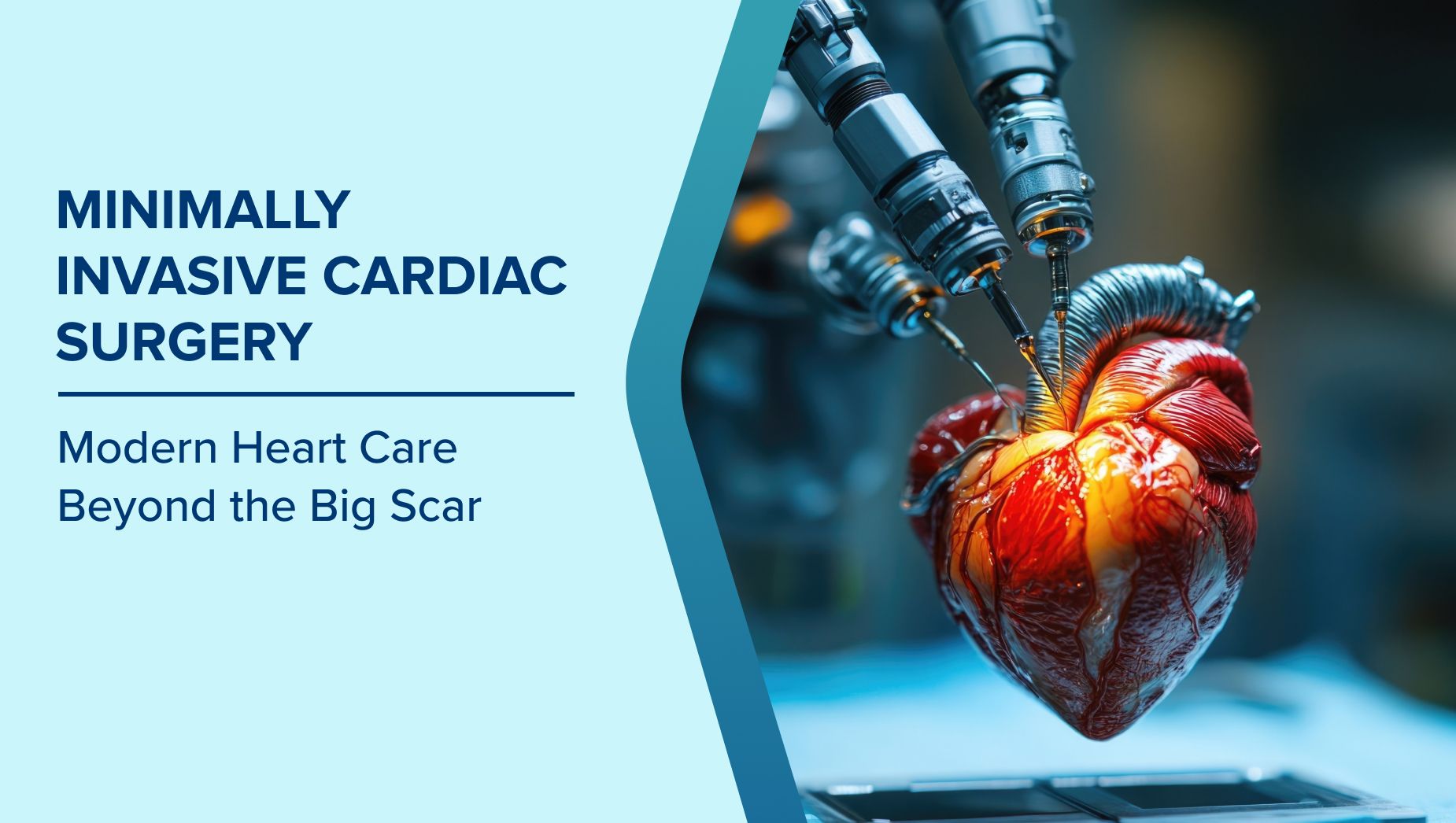
Minimally invasive cardiac surgery is a technique where surgeons repair or replace parts of the heart through very small incisions. Instead of opening the chest with a long midline cut and spreading the breastbone, the surgeon uses small openings between the ribs. Special long instruments and a small camera help the surgical team perform the procedure with accuracy.
This method reduces trauma to the chest while still allowing the surgeon to work directly on the heart. Many people choose minimally invasive heart surgery because it combines advanced technology, high success rates and a much smoother recovery experience.
Why Minimally Invasive Heart Surgery Is Becoming More Popular
More medical centers around the world now offer minimally invasive cardiac procedures because patients often recover faster and return to daily life sooner. Improved imaging systems and refined techniques means a wider range of heart problems can be treated through smaller incisions. As a result, people searching for safer and quicker heart treatments are turning to this approach.
Benefits of Minimally Invasive Cardiac Surgery
Minimally invasive cardiac surgery offers several advantages that support healing and comfort.
- Smaller incisions: Surgeons use openings just a few centimeters long. Smaller cuts usually mean less discomfort and fewer issues with wound healing.
- Reduced pain: Since the breastbone is not divided, patients often experience much less pain compared to traditional open heart surgery.
- Shorter hospital stay: Many people are able to leave the hospital earlier, which can lower healthcare costs and reduce the risk of hospital related infections.
- Faster recovery: With less trauma to the chest, muscles and bones heal more quickly. Patients can usually resume gentle activities within weeks.
- Lower risk of complications: Smaller incisions decrease the chances of excessive bleeding, major infections and long term chest instability.
- Improved cosmetic results: The scars are smaller and less noticeable, which can help with confidence during the healing period.
- Better breathing and mobility: Because the chest is not opened widely, lung function tends to return to normal sooner. Many patients move more easily after surgery.
Risks and Possible Complications
Although minimally invasive cardiac surgery is considered safe, every heart operation carries some risk. Your healthcare team will discuss these with you before the procedure.
Possible risks include:
- Bleeding
- Reaction to anaesthesia
- Infection
- Irregular heart rhythms
- Stroke in rare cases
- Need to switch from minimally invasive to open surgery if visibility or access to the heart becomes difficult
- Pain at incision sites
- Blood clots
The overall risk varies depending on age, general health, heart function and the complexity of the condition. Not all heart operations can be performed by minimally invasive techniques.
Who Might Need Minimally Invasive Cardiac Surgery
This technique is recommended for people who require repair or correction of certain heart problems but do not need a full open chest approach. It is especially helpful for patients who want a shorter recovery period or have conditions that make traditional open heart surgery more challenging.
You may be a candidate if you have:
- Mitral valve disease
- Aortic valve disease
- Tricuspid valve disease
- Atrial septal defect
- Atrial fibrillation requiring surgical treatment
- Coronary artery disease that can be treated with minimally invasive bypass surgery
- Tumors or growths inside the heart
Types of Minimally Invasive Cardiac Surgery
Several techniques fall under the umbrella of minimally invasive heart surgery. The type chosen depends on the heart problem and the surgeon’s expertise.
- Minimally invasive valve surgery: Used to repair or replace the mitral, aortic or tricuspid valve.
- Minimally invasive coronary artery bypass: Some patients can receive a bypass through small chest incisions.
- Minimally invasive maze procedure: Used for persistent atrial fibrillation.
- Thoracoscopic heart surgery: A camera and tools are inserted between the ribs.
- Robotic assisted heart surgery: Surgeons use robotic arms controlled from a console.
Expected Outcomes After Minimally Invasive Heart Surgery
Many patients enjoy excellent long term results. Benefits include:
- Better heart function
- Relief from symptoms like shortness of breath or fatigue
- Less postoperative pain compared to traditional surgery
- Stronger physical endurance over time
- Lower risk of complications from large chest incisions
- Improved emotional well being
Follow up appointments help your cardiologist track progress and ensure the heart is functioning well.
Frequently Asked Questions
Can I sleep on my side after minimally invasive heart surgery?
Yes, most patients can sleep on their side within the first week. Use pillows to support your body and avoid pressure on incision sites.
Will I need someone to stay with me at home?
It is helpful to have someone with you for the first few days while you regain strength.
How soon can I shower after the surgery?
Most people can shower within a couple of days. Avoid soaking until incisions heal.
Can I travel after minimally invasive cardiac surgery?
Short trips are usually allowed after your first follow up visit. Always check with your doctor.
Will I need cardiac rehabilitation?
Cardiac rehabilitation is recommended if you would benefit from supervised recovery support.
Written and Verified by:

Related Blogs

Dr. Ritwick Raj Bhuyan In Cardiac Sciences , Cardiac Surgery (CTVS)
Nov 08 , 2020 | 2 min read

Dr. Gaurav Minocha In Cardiac Sciences
Nov 08 , 2020 | 4 min read

Dr. Naveen Bhamri In Cardiac Sciences
Nov 08 , 2020 | 4 min read
Blogs by Doctor
Sleep and Heart Health: Why Rest Is the Key to a Strong Heart
Dr. Manoj Luthra In Cardiac Sciences , Paediatric (Ped) Cardiac Surgery , Cardiac Surgery
Sep 24 , 2025 | 5 min read
Most read Blogs

Related Blogs
Dr. Ritwick Raj Bhuyan In Cardiac Sciences , Cardiac Surgery (CTVS)
Nov 08 , 2020 | 2 min read
Dr. Gaurav Minocha In Cardiac Sciences
Nov 08 , 2020 | 4 min read
Dr. Naveen Bhamri In Cardiac Sciences
Nov 08 , 2020 | 4 min read
Blogs by Doctor
Sleep and Heart Health: Why Rest Is the Key to a Strong Heart
Dr. Manoj Luthra In Cardiac Sciences , Paediatric (Ped) Cardiac Surgery , Cardiac Surgery
Sep 24 , 2025 | 5 min read
Most read Blogs