 WhatsApp Us (24/7)
 +91 926 888 0303 (24/7)


To Book an Appointment
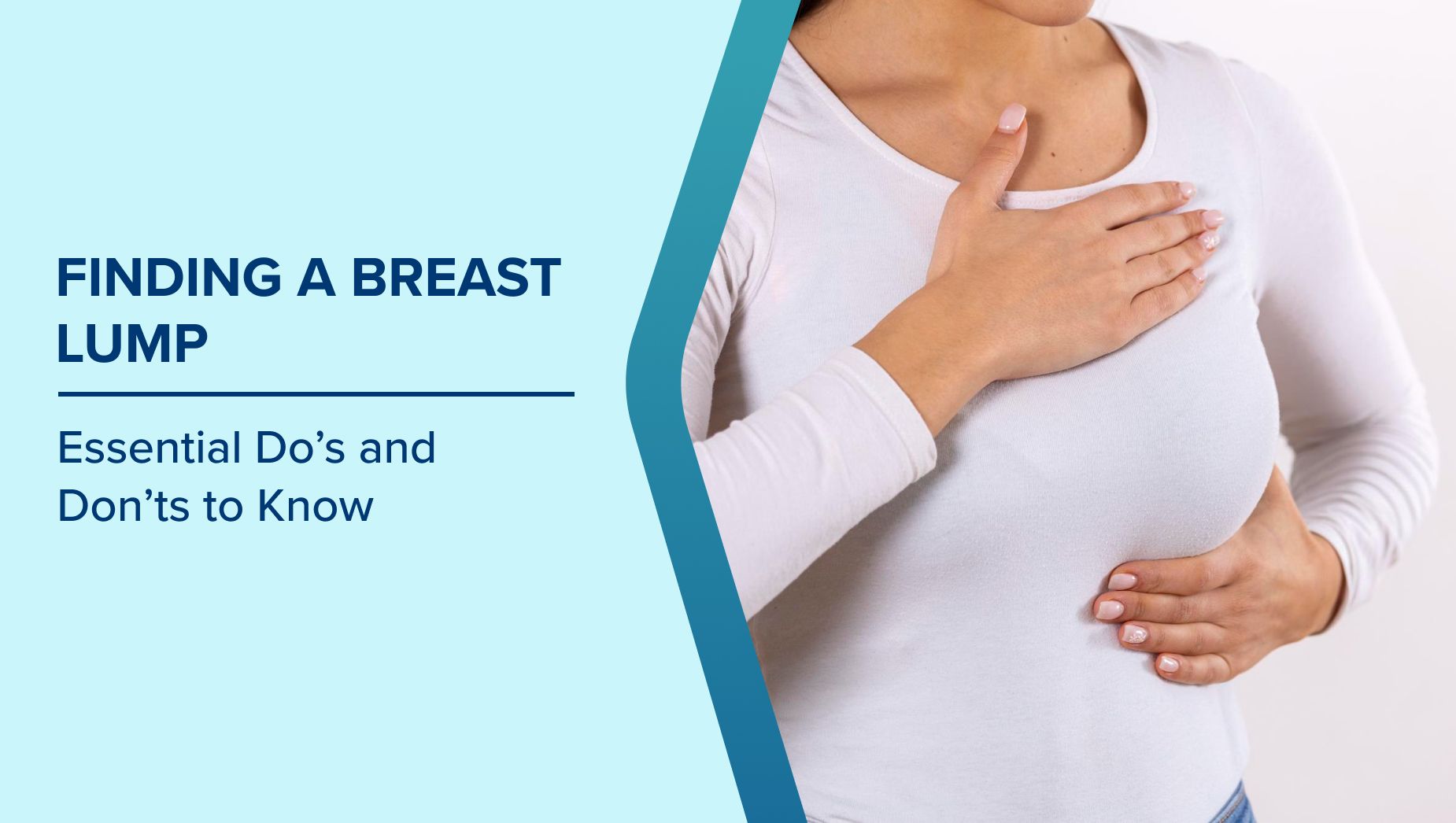
Call Us+91 926 888 0303Finding a Breast Lump: Essential Do’s and Don’ts to Know
By Dr. Ashish Gautam in General Surgery , Laparoscopic / Minimal Access Surgery , Bariatric Surgery / Metabolic , Robotic Surgery
Jan 06 , 2026 | 7 min read

Discovering a breast lump can be an unsettling experience for anyone. It is natural for your mind to race the moment you notice something unusual, especially when it concerns an area connected to your overall health and well-being. Many people assume the worst when they feel a lump, but not every lump is harmful or linked to something severe. Even so, taking calm and sensible steps is important so that you understand what it means and what needs to be done next.
Finding changes in your breast can make you feel uncertain or anxious, and this is exactly why knowing the right approach can make a clear difference. Awareness, timely action and clarity are the three things that help you move through the situation with confidence.
Understanding What a Breast Lump Can Mean
A breast lump can appear for many possible reasons. Some are simple hormonal changes. Others may come from benign growths that are not dangerous. Certain lumps may relate to breast infections or blocked ducts. In some cases, a lump might require medical attention to rule out serious concerns. The presence of a lump alone does not determine the exact cause, and this is why guessing based on touch or appearance is not useful.
Your breast tissue can feel different at various times of the month because of natural hormonal shifts. Some women notice their breasts feel tender, heavier or grainy during their menstrual cycle. A lump that appears during this time may settle on its own. Other lumps feel firm, well-defined or move easily under the skin. Some may feel irregular, uncomfortable or fixed. The texture, size, shape and mobility can give your doctor clues, but only a medical evaluation can confirm the nature of the lump.
Understanding this helps you realise that discovering a lump is the beginning of awareness, not a conclusion. It is a sign to slow down, notice your body and make sensible decisions without assuming the worst. Your next steps matter more than the moment you find the lump.
What to Do Immediately After Finding a Breast Lump
Your first response sets the tone for how smoothly the next few days unfold. When handled calmly, you protect your peace of mind and make it easier for your doctor to guide you.
Stay Composed and Observe the Lump
Your emotions may shift quickly when you first detect a lump. Feeling worried is normal, but try not to panic. Take a few slow breaths and remind yourself that many breast lumps are not harmful. Instead of rushing into conclusions, acknowledge that your body is signalling something that deserves attention.
Gently check the area again after a short break. Make sure you are in a comfortable position, preferably standing or lying down, and use the pads of your fingers. Notice where the lump is located, how it feels and whether it moves.
Note Important Details
Before meeting a doctor, noting a few observations can help you describe the findings clearly. These details may include:
- When you first noticed the lump
- Whether it feels soft, firm or uneven
- If it moves slightly when touched
- Whether you feel any discomfort
- If you have noticed recent changes in your breast shape, skin appearance or nipple discharge
You do not need to analyse any of this on your own. This information is simply helpful for your doctor.
Check Again After a Few Days
Some lumps related to hormonal shifts may feel different after your menstrual cycle. If you are due for your period, you may wait a few days to see if the lump becomes less noticeable. This does not mean ignoring it entirely, but instead giving your body enough time to settle if the cause is hormonal.
If the lump remains the same or becomes more noticeable, you should arrange a medical check-up without delay.
Schedule an Appointment with a Breast Specialist
Once you confirm the lump is still present, the next step is consulting a breast specialist. You can see a general physician first, but many people prefer to meet a breast surgeon or specialist directly for reassurance and clarity.
A medical professional will examine the lump carefully and may suggest imaging tests such as a breast ultrasound or mammogram to understand it better. These steps are routine and are meant to give accurate insights.
What You Should Avoid After Finding a Breast Lump
In moments of worry, people often take steps that create more stress. Avoiding these common mistakes will help you stay grounded and safe.
Avoid Searching the Internet for Diagnosis
Reading random online information can increase your fear. Many websites mix severe conditions with common ones, which can make you imagine unrealistic scenarios. The internet cannot examine your body, understand your symptoms or guide you personally. Instead of scrolling through alarming descriptions, rely on a doctor who can give you clear answers based on your actual situation.
Do Not Keep the Lump a Secret
Some people hesitate to discuss their findings with family members because they do not want to create worry. While privacy is understandable, keeping it to yourself may increase your anxiety. Speaking to someone you trust can help you feel supported, even if it is only to say that you are scheduling a medical check-up.
Do Not Press, Rub or Try to Examine the Lump Repeatedly
Frequent squeezing or pressing can irritate the tissue around the lump and make the area more sensitive. Constant palpation can also make you more anxious because the lump may feel different at different times of the day. A gentle check once or twice is enough. Let your doctor perform a proper examination.
Avoid Assuming the Lump is Harmless
Although many lumps are benign, it is best not to make assumptions. Ignoring a lump for too long can delay necessary attention. Early evaluation always leads to better reassurance and timely care if needed.
Do Not Panic or Jump to Conclusions
The presence of a lump does not automatically mean something serious. Avoid overwhelming yourself with negative thoughts. Focus on taking practical steps rather than imagining outcomes.
Preparing for Your Medical Examination
Once you have arranged your appointment, you may wonder what the visit involves. Understanding the process ahead of time can ease your mind.
Physical Examination
The specialist will examine your breasts to understand the texture, mobility and nature of the lump. They may also check the underarm area, as this helps provide a complete assessment.
Imaging Tests
Depending on your age and the characteristics of the lump, you may be advised to undergo certain imaging tests. These tests help confirm whether the lump is solid, fluid-filled or has features that require further evaluation. Breast imaging is routine and painless.
Additional Procedures When Necessary
In some cases, the doctor may advise further procedures to understand the lump better. These are performed only when needed and are always explained beforehand. The purpose is to ensure clarity and accuracy.
Myths and Misconceptions About Breast Lumps
Myth: All Breast Lumps Are Linked to Cancer
Most lumps are caused by reasons unrelated to cancer. Many are benign conditions that can be managed easily.
Myth: Only Older Women Can Develop Lumps
Breast changes can appear at any age. Hormonal shifts, infections or benign growths can happen in young individuals as well.
Myth: A Lump That Moves Is Always Safe
Movement does not guarantee harmlessness. Only a proper evaluation can confirm the nature of the lump.
Myth: Painful Lumps Are Always Benign
While many painful lumps are harmless, pain itself does not determine the cause.
Myth: A Healthy Lifestyle Prevents All Breast Lumps
Healthy habits support wellbeing, but breast lumps can appear for reasons beyond lifestyle choices.
When to Seek Immediate Medical Attention
There are certain signs that should not be ignored. If you notice sudden changes such as unusual discharge, visible skin changes or rapid alterations in breast shape, contact your doctor without delay. These signs do not always indicate something severe, but early assessment is always beneficial.
Conclusion
Finding a breast lump can make you feel uncertain, but taking calm and practical steps provides clarity and reassurance. By observing the lump carefully, seeking timely medical guidance and avoiding assumptions, you support your health in the safest way. Awareness and early action are powerful tools that help you move forward with confidence.
FAQs
How often should someone perform a breast self-examination?
A monthly self-check is helpful. It allows you to become familiar with your natural breast texture so that you can recognise new changes early.
Does every breast lump require imaging?
Not always. Your doctor will advise imaging based on your age, symptoms and examination findings.
Can breastfeeding lead to breast lumps?
Yes, blocked milk ducts and breast infections can cause temporary lumps during breastfeeding.
Should I avoid physical exercise if I find a lump?
You can continue light activities unless they cause discomfort. If pain increases, discuss it during your check-up.
Can stress cause breast lumps?
Stress does not directly create lumps, but it may affect hormonal patterns that influence breast sensitivity.
Written and Verified by:

Related Blogs

Medical Expert Team
Oct 20 , 2015 | 1 min read
Dr. Vishwas Sharma In General Surgery
Apr 23 , 2015 | 1 min read

Dr. Yogesh Agarwala In General Surgery , Laparoscopic / Minimal Access Surgery , Bariatric Surgery / Metabolic
Apr 20 , 2016 | 1 min read
Blogs by Doctor

Most read Blogs

Related Blogs
Medical Expert Team
Oct 20 , 2015 | 1 min read
Dr. Vishwas Sharma In General Surgery
Apr 23 , 2015 | 1 min read
Dr. Yogesh Agarwala In General Surgery , Laparoscopic / Minimal Access Surgery , Bariatric Surgery / Metabolic
Apr 20 , 2016 | 1 min read
Blogs by Doctor
Most read Blogs